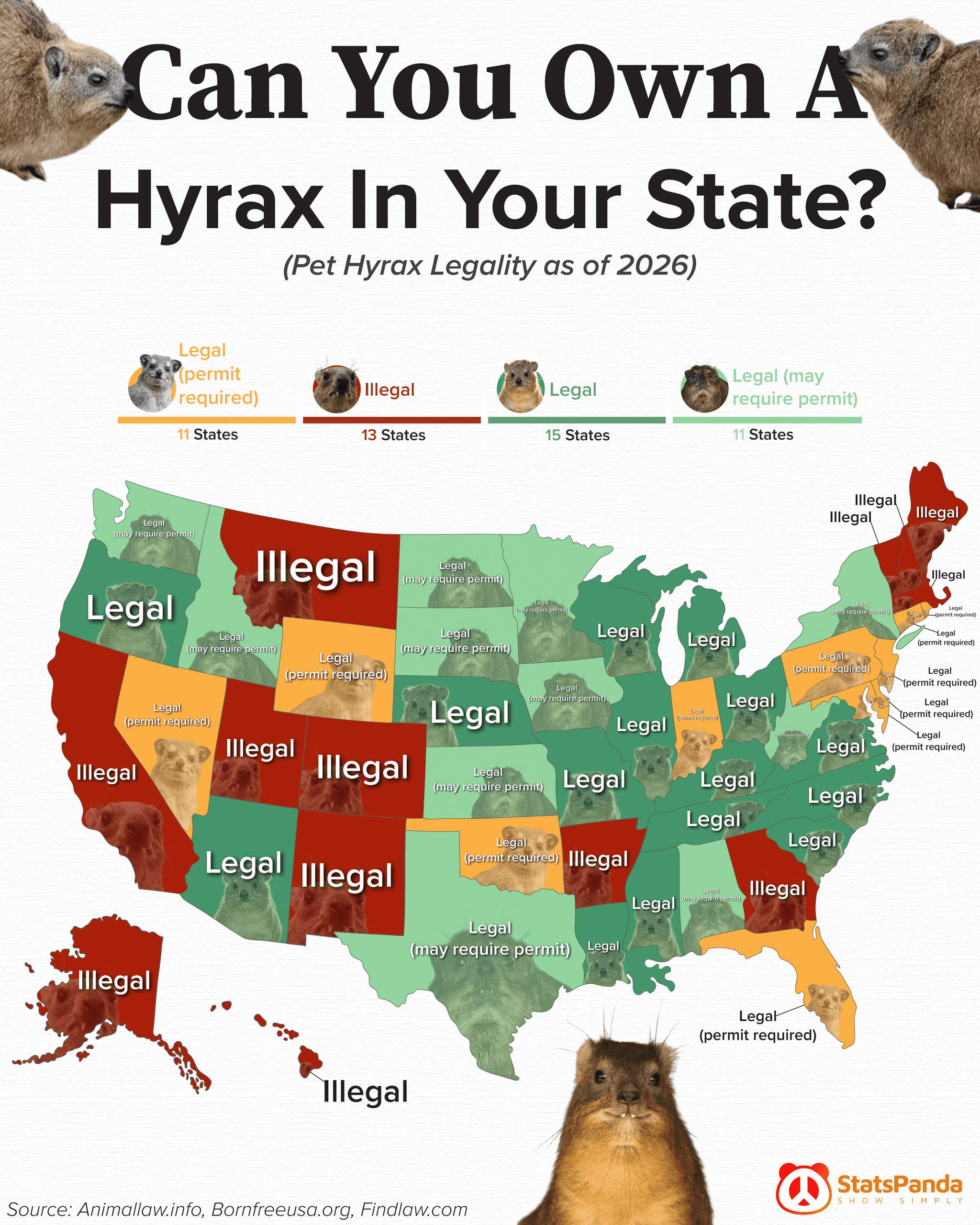
Is it legal to own a pet hyrax? 15 states allow hyrax ownership without a permit, 11 require one, and 13 ban them outright. See the full state-by-state breakdown of hyrax pet laws for 2026.
Pet Hyrax Legality by State
Is it legal to own a hyrax as a pet? The answer depends entirely on where you live. This map breaks down pet hyrax legality across all 50 U.S. states as of 2026, sourced from Animallaw.info, BornFreeUSA.org, and Findlaw.com. State exotic animal regulations are categorized into four frameworks: fully legal (no permit needed), legal with an exotic animal permit required, legal but a permit may be required depending on local interpretation, and completely illegal.
Because hyraxes are so rarely kept as pets in the United States, the overwhelming majority of states don't mention them by name in their wildlife codes — meaning legality hinges entirely on how each state classifies unlisted non-native species under its exotic pet laws.
| State | Legal Status |
|---|---|
| Alabama | Legal |
| Alaska | Legal (permit required) |
| Arizona | Legal |
| Arkansas | Illegal |
| California | Illegal |
| Colorado | Illegal |
| Connecticut | Illegal |
| Delaware | Legal (permit required) |
| Florida | Legal (permit required) |
| Georgia | Illegal |
| Hawaii | Illegal |
| Idaho | Legal (may require permit) |
| Illinois | Illegal |
| Indiana | Legal (permit required) |
| Iowa | Legal (may require permit) |
| Kansas | Legal |
| Kentucky | Legal (may require permit) |
| Louisiana | Illegal |
| Maine | Illegal |
| Maryland | Legal (permit required) |
| Massachusetts | Illegal |
| Michigan | Legal (may require permit) |
| Minnesota | Legal (may require permit) |
| Mississippi | Illegal |
| Missouri | Legal |
| Montana | Illegal |
| Nebraska | Legal |
| Nevada | Legal |
| New Hampshire | Legal (may require permit) |
| New Jersey | Legal (permit required) |
| New Mexico | Legal |
| New York | Legal (permit required) |
| North Carolina | Legal |
| North Dakota | Legal (may require permit) |
| Ohio | Legal |
| Oklahoma | Legal (may require permit) |
| Oregon | Legal |
| Pennsylvania | Legal (permit required) |
| Rhode Island | Legal (permit required) |
| South Carolina | Legal |
| South Dakota | Legal (permit required) |
| Tennessee | Legal (may require permit) |
| Texas | Legal |
| Utah | Legal (may require permit) |
| Vermont | Illegal |
| Virginia | Legal |
| Washington | Legal (may require permit) |
| West Virginia | Legal |
| Wisconsin | Legal |
| Wyoming | Legal (permit required) |
Key Findings: Where Are Hyraxes Legal?
Only four states name hyraxes in their wildlife codes. Oregon classifies all hyrax species as "noncontrolled," requiring no exotic animal permit whatsoever. Indiana requires a Wild Animal Possession Permit costing roughly $20 per year. California bans pet hyraxes outright under Title 14 CCR § 671, while Georgia prohibits them under the traditional English name "conies." In the remaining 46 states, whether you can legally own a hyrax depends entirely on how each state handles unlisted non-native species.
Missouri is the easiest state to own a hyrax. Missouri's state code explicitly permits ownership of "all mammals not native to Missouri" without any permit, making it one of the most permissive states in the country for exotic pet ownership across the board — hyraxes included.
Florida has the most accessible exotic pet permit. Florida's Class III personal pet permit is free of charge and covers a wide range of exotic species including hyraxes. For prospective hyrax owners in permit-required states, Florida sets the lowest barrier to legal ownership.
Pennsylvania has the hardest exotic animal permit to get. While technically legal with a permit, Pennsylvania requires two years of documented hands-on experience with the specific species before an Exotic Wildlife Possession Permit will even be considered — making it the most restrictive permit state for hyrax ownership in the country.
Can you own a hyrax in California? No. California's sweeping ban on non-native wildlife as pets extends to hyraxes. Title 14 CCR § 671 prohibits possession of restricted species without a special permit, and hyraxes fall squarely under that restriction. This makes California one of the strictest states for exotic animal ownership alongside Georgia, which specifically names hyraxes in its ban.
Can you own a hyrax in Texas? Yes. Texas has some of the most permissive exotic animal laws in the country. Hyraxes are fully legal to own as pets in Texas without any state-level permit, though local county or city ordinances may apply.
What Is a Hyrax? The Elephant's Tiny Cousin
Despite looking like a large guinea pig or a groundhog, the rock hyrax (Procavia capensis) is one of the most taxonomically surprising mammals on Earth. Anyone considering a pet hyrax should understand what makes these animals so unique — and so challenging to care for.
- Hyraxes are related to elephants — Along with manatees and aardvarks, hyraxes belong to the superorder Afrotheria, sharing a common ancestor with elephants roughly 60 million years ago. This makes the hyrax one of the elephant's closest living relatives
- They're small but tough — Rock hyraxes typically weigh 5–11 pounds and measure about 20 inches long, with dense fur and rubbery foot pads for gripping rocky terrain
- Temperature regulation is a challenge — Hyraxes have a poorly developed internal thermostat and rely on huddling and sun-basking to regulate body temperature, which can make indoor pet hyrax care complicated in cooler climates
- They're social and vocal — Hyraxes live in colonies of up to 80 individuals in the wild and communicate with a complex system of calls, including territorial songs that can last several minutes
- They have tusk-like incisors — Their small, continuously growing upper incisors resemble tiny tusks — another nod to their elephant lineage — and they can deliver a painful bite
- Their lifespan is 10–12 years — Rock hyraxes can live over a decade in captivity, making pet hyrax ownership a long-term commitment comparable to a dog
Are Hyraxes Good Pets?
While hyraxes are undeniably fascinating animals, they are not domesticated and present unique challenges as exotic pets. Hyraxes require specialized diets high in roughage and vegetation, consistent warm temperatures, and ideally a companion hyrax since they are highly social animals. They can be affectionate with their owners when hand-raised, but they are also territorial, prone to stress, and their tusk-like incisors can cause serious bites. Most exotic animal veterinarians have limited experience with hyrax care, which can make routine health maintenance difficult.
Prospective owners should also consider the cost of a pet hyrax. While pricing varies, hyraxes are extremely rare in the U.S. pet trade, and acquiring one typically costs several thousand dollars. Ongoing care costs — including specialized veterinary visits, proper diet, and habitat requirements — add up significantly over their 10–12 year lifespan.
States Where Hyraxes Are Illegal
Thirteen states have outright bans or regulatory frameworks that effectively prohibit hyrax ownership:
- Arkansas — Classifies hyraxes under its broad exotic wildlife restrictions, requiring permits that are not issued for personal pet purposes
- California — Prohibits possession under Title 14 CCR § 671, which restricts all non-native wildlife unless specifically exempted
- Colorado — The Division of Wildlife maintains a list of approved species; hyraxes are not on it
- Connecticut — Bans importation and possession of most exotic wildlife without specific authorization
- Georgia — Explicitly bans hyraxes under the traditional English name "conies" in its wildlife code
- Hawaii — Strict importation laws prohibit nearly all non-native mammals to protect the islands' fragile ecosystem
- Illinois — The Department of Natural Resources broadly prohibits possession of non-domestic mammals
- Louisiana — Restricts ownership of non-native wildlife under its exotic animal possession regulations
- Maine — Requires permits for wildlife possession that are effectively unavailable for exotic pets
- Massachusetts — Maintains a strict list of domesticated animals; anything not on the list is prohibited
- Mississippi — Prohibits possession of inherently dangerous or non-native wild animals without permits that are not available for personal use
- Montana — Classifies non-native wildlife under controlled species regulations that prohibit personal ownership
- Vermont — The Commissioner does not issue permits for wild animals intended as personal pets
How to Get an Exotic Animal Permit for a Hyrax
In the 11 states that require an exotic animal permit for hyrax ownership, the process varies widely. Florida offers the simplest path with a free Class III personal pet permit that can be applied for online. Indiana charges roughly $20 per year for its Wild Animal Possession Permit. At the other end of the spectrum, Pennsylvania demands two years of documented hands-on experience with hyraxes specifically before an Exotic Wildlife Possession Permit application will even be reviewed.
In general, exotic pet permits require applicants to demonstrate proper housing and enclosure specifications, proof of veterinary care arrangements, liability insurance in some states, and compliance with local zoning ordinances. Contact your state's Department of Fish and Wildlife or equivalent agency for the most current application requirements and fees.
Important Caveats for Hyrax Owners
Even in states where hyrax ownership is legal at the state level, county or municipal exotic animal restrictions may apply. Some cities and counties have their own exotic animal ordinances that can be more restrictive than state law. Prospective hyrax owners should always check with local animal control and municipal authorities before acquiring one.
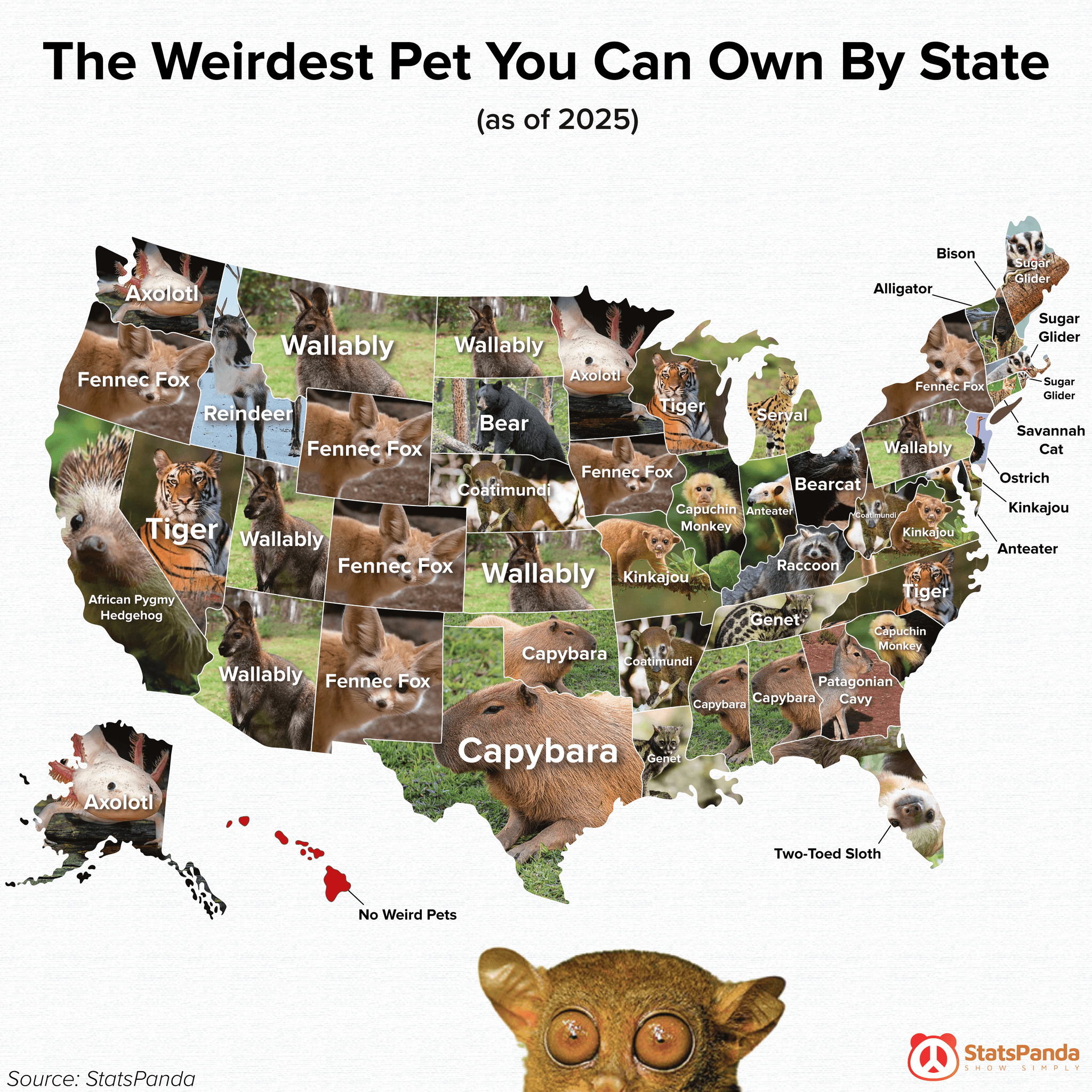
Finding a hyrax for sale in the United States is itself a significant challenge. Unlike more popular exotic pets such as capybaras, hedgehogs, or sugar gliders, hyraxes are extremely rare in the U.S. pet trade. There are very few domestic breeders, and importing a hyrax from Africa involves CITES permits and USDA regulations that add layers of complexity and cost beyond state-level legality.
Hyrax vs. Capybara: Exotic Pet Law Comparison
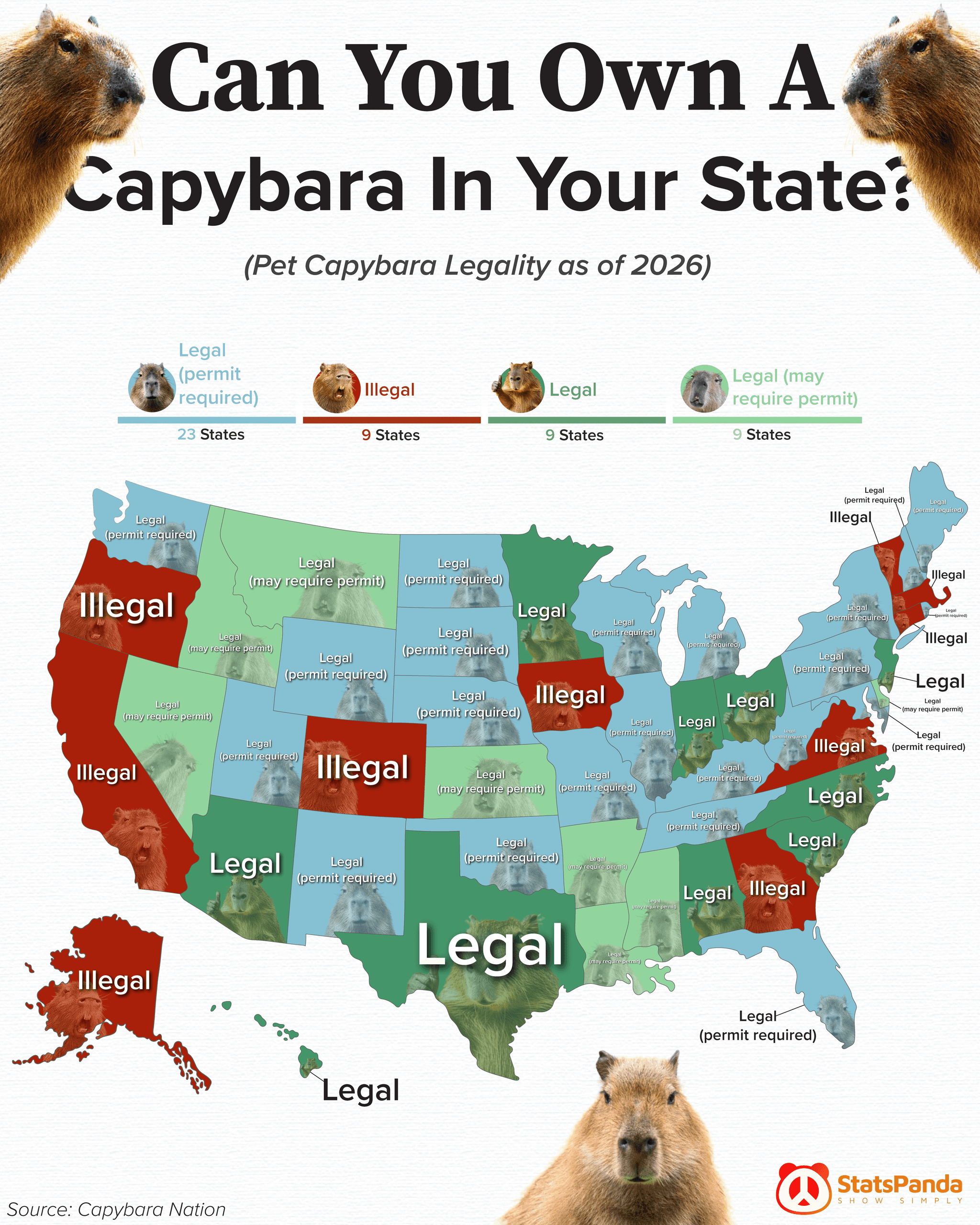
Hyrax and capybara ownership laws share a similar patchwork pattern across the U.S., but there are notable differences. Capybaras are illegal in only 9 states compared to 13 for hyraxes, and capybaras have a much more established domestic breeding market. Interestingly, Oregon — which bans capybaras outright — classifies hyraxes as fully legal "noncontrolled" species. Both animals face the same fundamental challenge: most state wildlife codes were not written with these species in mind, so legality depends on default rules for unlisted non-native animals.
Methodology
Data compiled from Animallaw.info, BornFreeUSA.org, and Findlaw.com, cross-referenced with individual state wildlife agency regulations. Pet hyrax legality is categorized into four frameworks: fully legal (no permit needed), legal with exotic animal permit required, legal but permit may be required (varies by locality or species classification), and illegal. Data current as of 2026. Only four states — Oregon, Indiana, California, and Georgia — name hyraxes explicitly in their wildlife codes; all other state classifications are based on how each state handles unlisted non-native exotic species. Local county and municipal regulations may impose additional restrictions beyond state-level exotic pet laws.