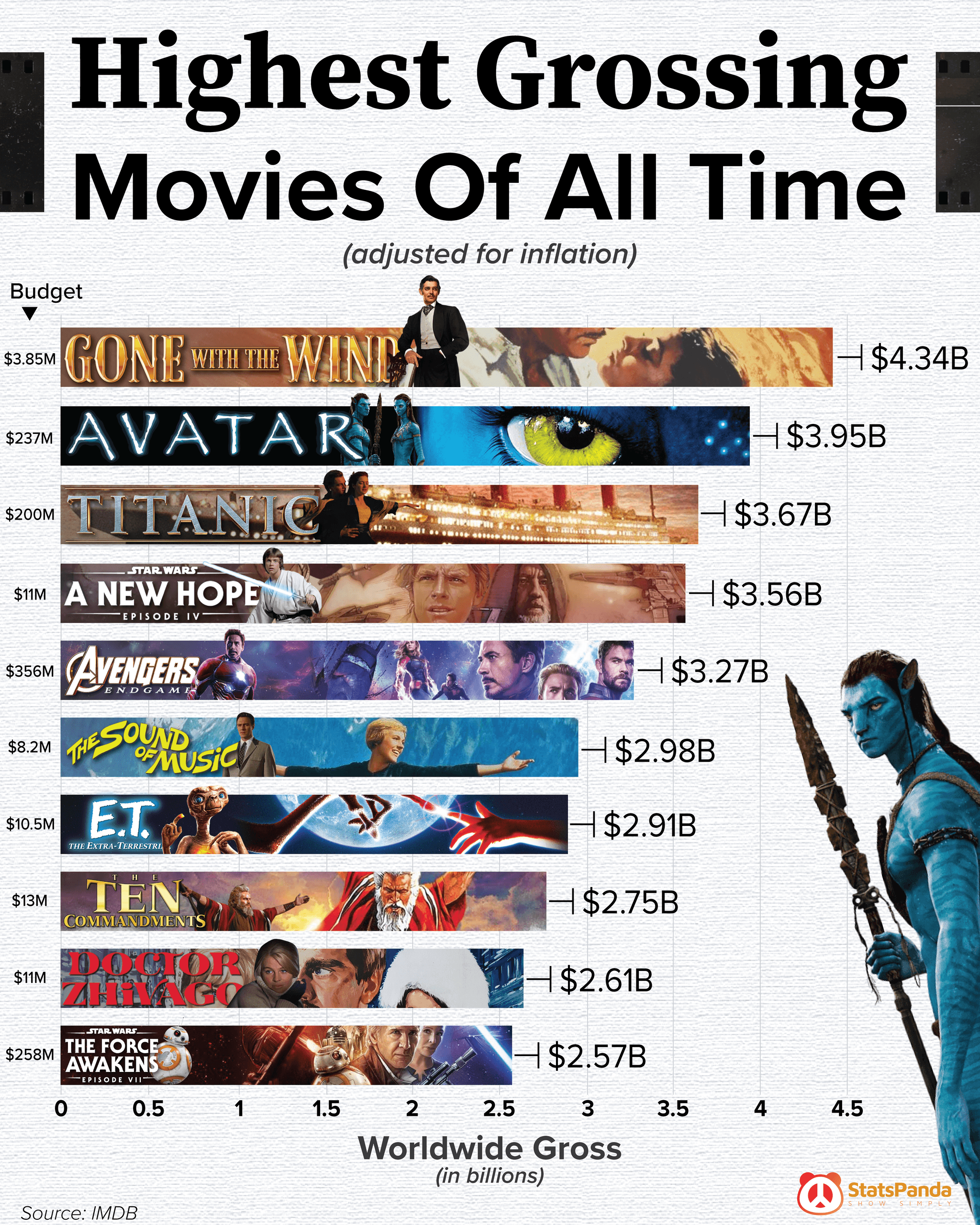
When adjusted for inflation, Gone with the Wind leads with $4.34 billion—not Avatar. Historical ticket prices reveal a different picture of box office dominance than raw numbers suggest.
The Data
Box office records typically report raw dollar figures, which naturally favor recent films. When we adjust for inflation—accounting for changing ticket prices and the value of money over time—a very different picture emerges of cinema's true blockbusters.
| Rank | Film | Year | Adjusted Gross | Nominal Gross |
|---|---|---|---|---|
| 1 | Gone with the Wind | 1939 | $4.34B | $390M |
| 2 | Avatar | 2009 | $3.95B | $2.92B |
| 3 | Titanic | 1997 | $3.67B | $2.26B |
| 4 | Star Wars | 1977 | $3.37B | $775M |
| 5 | Avengers: Endgame | 2019 | $3.21B | $2.80B |
| 6 | The Sound of Music | 1965 | $2.93B | $286M |
| 7 | E.T. the Extra-Terrestrial | 1982 | $2.84B | $793M |
| 8 | The Ten Commandments | 1956 | $2.67B | $122M |
| 9 | Doctor Zhivago | 1965 | $2.42B | $112M |
| 10 | Jaws | 1975 | $2.37B | $476M |
Analysis
Gone with the Wind remains untouchable. Released in 1939 when ticket prices averaged 23 cents, the Civil War epic sold an estimated 202 million tickets in North America alone. Multiple theatrical re-releases over decades compounded its total. Adjusting for inflation, its $390 million nominal gross becomes an astounding $4.34 billion.
Classic Hollywood dominates. Six of the top ten films were released before 1985. Movies like The Sound of Music, The Ten Commandments, and Doctor Zhivago were cultural events that drove repeated viewings in an era before home video—people would see the same film multiple times in theaters.
Modern films still impress. Avatar, Titanic, and Avengers: Endgame all crack the top five, proving that contemporary blockbusters can compete with Hollywood's golden age. These films benefited from higher ticket prices, 3D premiums, and global simultaneous releases.
Why This Matters
Understanding inflation-adjusted box office reveals several truths:
- Ticket sales matter more than dollar figures — Raw gross hides changing economics
- Re-releases were common — Films stayed in theaters for years, not weeks
- Cultural impact had time to build — Word of mouth drove sustained attendance
- Competition was limited — Fewer entertainment options meant higher per-film attendance
When someone claims a new film is "the biggest ever," checking the inflation-adjusted list provides essential context. True cultural phenomena transcend their era's ticket prices.
Methodology
Inflation adjustment uses the Consumer Price Index (CPI) to convert historical box office figures to current-year dollars. Data sourced from Box Office Mojo and IMDB. Includes global theatrical gross for modern films; historical films may represent North American figures due to incomplete international data from earlier eras.